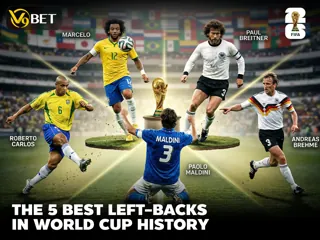
Top 5 Greatest Left-Backs in FIFA World Cup History
In the world of football, the left-back position is often seen as being “behind the success” rather than the main spotlight like strikers or playmakers. However, when we look deeper at the biggest stage like the FIFA World Cup, it becomes clear that this position is one that can truly “change the game.”
In the past, World Cup history shows that left-backs were primarily responsible for defending the flanks and stopping opposition attacks. But as football evolved into a more tactically complex era, the role of the left-back changed dramatically.
Modern left-backs are no longer just defensive players—they are attacking drivers who can push forward, create chances, and even score goals.
This is why in this article, we won’t just talk about fame or trophies, but analyze how each left-back “influenced the game” and why they are considered among the greatest in World Cup history.

Legendary left-back
The Evolution of Left-Backs in World Cup History
If we go back to the early days of the World Cup, the role of the left-back was quite limited. Their primary responsibility was defense, with little to no involvement in attack.
However, as football evolved, speed and tactics became more important, and left-backs began to take on greater attacking roles.
Teams that succeed in the World Cup often have left-backs who can perform both roles effectively—defending well and contributing to the attack.
Today, the left-back position requires one of the most complete skill sets in football. Players must have speed, strength, game awareness, and technical ability.
This transformation has made the left-back a “key variable” that can define a team’s style of play.
From purely defensive to a dual attacking-defensive role
In modern football, left-backs can no longer be just defensive players. They must push forward, help create chances, and contribute to build-up play from the back.
This requires high fitness levels and the ability to run up and down the pitch throughout the match. Players who excel in this role often become highly influential in the game.
Achraf Hakimi: A Modern Full-Back Changing the Game with Speed and Power
Hakimi represents the modern left-back perfectly. He is not just a positional player, but someone who can create impact on his own.
His standout quality is “speed”—not just in running, but also in decision-making.
He can carry the ball from defense to attack in seconds and instantly create dangerous situations. Additionally, his bravery allows him to take risks and create opportunities where others hesitate.
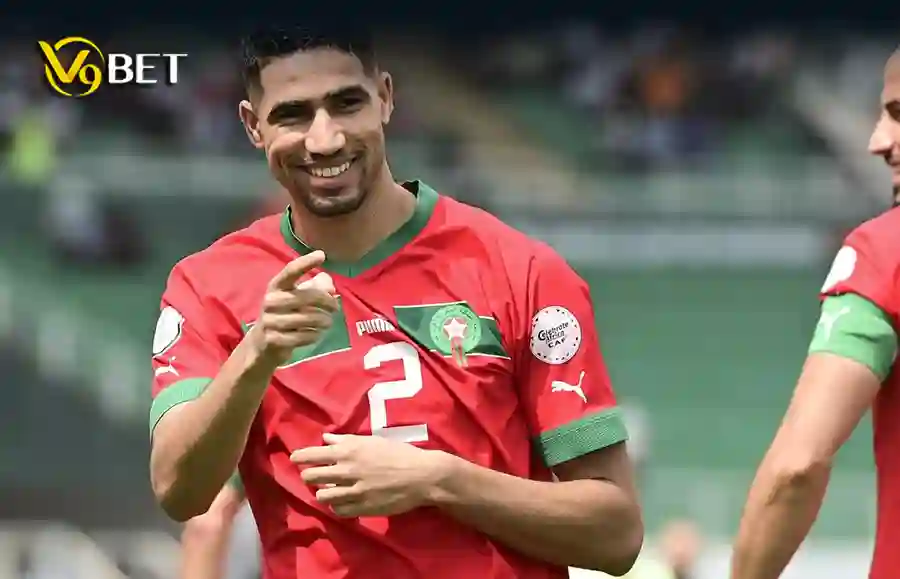
Achraf Hakimi
Hakimi’s role in the World Cup and tactical influence
On the World Cup stage, Hakimi has shown that a left-back can be a key player for the team.
He contributes not only to attack but also quickly tracks back to defend. His ability to perform both roles makes him one of the most important players in the squad.
Cafu: The Benchmark of a Complete Left-Back
Cafu is always mentioned when discussing the greatest left-backs.
He represents consistency and a deep understanding of the game. What sets Cafu apart is his ability to maintain high performance throughout the entire match.
He continuously supports the attack while also contributing effectively in defense.
World Cup success and Cafu’s role in Brazil
Cafu played a key role in Brazil’s success.
He was not only a great player but also a leader on the pitch. His ability to maintain team balance makes him one of the greatest left-backs of all time.
Andreas Brehme: The Left-Back Who Decides Games with Composure and Precision
Brehme is an example of a left-back who didn’t rely on speed or power but stood out through “attention to detail.”
He was highly accurate and made the right decisions in crucial moments. His composure is what made him exceptional at the World Cup level.
Marcelo: The Creative Left-Back Who Transformed Attacking Play
Marcelo is clearly “different” from other left-backs—not just because of his technical ability, but because of how he understands football.
He doesn’t play within the traditional left-back role, but more like a “wide playmaker” who can move into central areas and connect the attack smoothly.
What makes Marcelo stand out is his ball control in tight spaces and sharp decision-making. He can create chances out of seemingly nothing.
The ability to “create play” that sets Marcelo apart
Marcelo is not just a player who overlaps and crosses—he is someone who can “design the tempo of the game.”
He has exceptional vision, spotting spaces others cannot and using his skills to create opportunities.
This makes him not just a left-back, but a playmaker operating from the flank—one of the most influential in his era.
Paolo Maldini: The Definition of Defensive Perfection at the World Cup
When it comes to the phrase “perfect defensive left-back,” Paolo Maldini is a name few would argue against.
He did not rely on speed or power, but on superior “game reading” and “positioning.”
At the World Cup, Maldini demonstrated complete control in defense, stopping world-class players without needing aggressive tackles.
What set him apart was his composure—never rushed, never panicked, always making precise decisions.
He was also a leader who elevated the performance of his entire team.
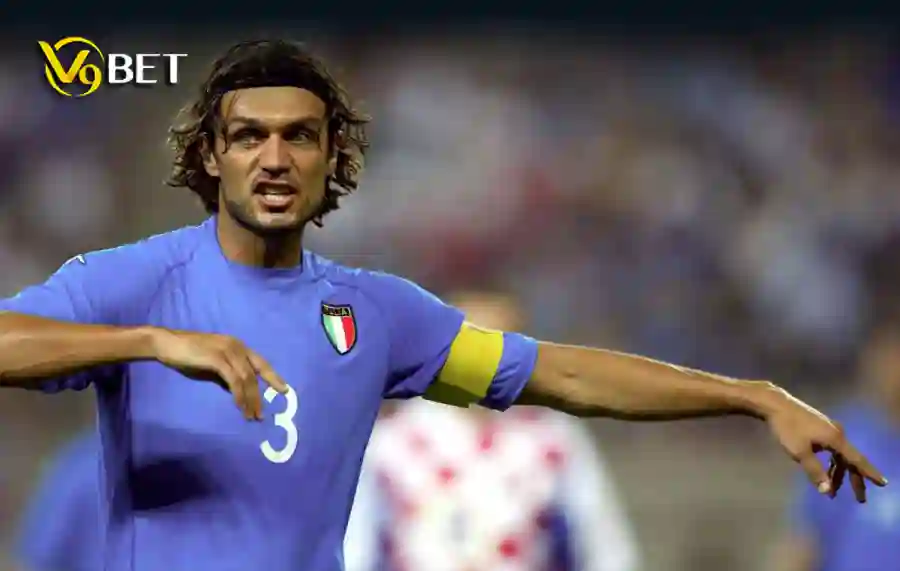
Paolo Maldini
Comparing 5 Legendary Left-Backs: Who Is the Greatest in World Cup History?
Looking at all five players, each has distinct strengths, and none is overwhelmingly superior.
- Cafu – the standard of balance, excelling in both attack and defense
- Maldini – the ultimate defender with virtually no weaknesses
- Marcelo – creativity that can change games single-handedly
- Hakimi – speed and power suited to modern football
- Brehme – composure and precision capable of deciding matches
Choosing “the greatest” depends on perspective, but what they all share is their “influence on the game,” which is why they are remembered in World Cup history.
Read more: Analyzing which host nation will go the furthest in the 2026 World Cup
Tactical perspective and its impact on football analysis
Understanding the role of a left-back at this level is not just informative—it helps you “read the game” more deeply.
You begin to see how a left-back’s forward movement can change a team’s structure and how proper positioning reduces risk.
These are key details in football analysis.
Conclusion
At the World Cup, the left-back position is not just a supporting role—it is one that can determine match outcomes.
The five players in this article demonstrate how this position can make a difference at the highest level.
They didn’t just play their roles—they elevated them into “game-changing factors.” For those who want more than just watching football, understanding these details allows deeper insight.
And when you can analyze games more accurately, you can apply that knowledge to betting effectively. This is where V9Bet comes in.
It’s not just a betting platform, but a tool that helps turn your “game understanding” into real “opportunities.”